The South Korean DMZ is a border area that covers and protects the final meters to the actual border between North Korea and South Korea. This demilitarized zone was established in 1953 after the end of the Korean War and has served as a so-called buffer zone ever since.
Since crossing the border into North Korea from South Korea is impossible, I can unfortunately only visit the DMZ from Seoul. I am making this trip alone, as I would not bring children here. The border to North Korea is considered one of the most dangerous borders in the world because a state of war still exists here. Only in the DMZ is there an armistice.
So you wouldn't have to go there, I set out and took some exciting, adventurous, and interesting photos, and took a closer look at the area around the border. But first, I have to say that the feeling there was unique and doesn't come across in any of the photos.
On the morning of my tour to the DMZ, two North Koreans defected to South Korea across the sea. One of them survived, and that made the whole experience even more intense. Until a few minutes before entering the DMZ, it wasn't clear if I would be allowed to go there that day or anytime soon. Pure thrill!
What is the DMZ and why does it exist?

The demilitarized zone runs precisely along the 38th parallel, separating North Korea from South Korea. It was established after the Korean War, which took place from 1950 to 1953. No peace treaty has been signed yet (as of 2024), and therefore this zone, where an armistice has been in effect since 1953, still exists.
The DMZ is a good 250 km long and 4 kilometers wide. It therefore runs across the Korean Peninsula, dividing it into two parts. The so-called Military Demarcation Line (MDL) is the actual border between North Korea and South Korea. On my excursion, I get to within about 250 meters of the border. Unfortunately, you can't get any closer, or else it would be life-threatening.
After the fall of the Berlin Wall in Germany, the DMZ is one of the last remnants of the Cold War. Generally, within the DMZ, a lot reminds me of the history of Germany and the GDR. Even though the DMZ is significantly larger in all areas and does not represent a physical border in that sense, like the Wall.
Since the DMZ is centrally placed over the MDL, meaning over the actual border between both countries, there is a South Korean DMZ and a North Korean DMZ. From Seoul or from South Korea, you can only visit the South Korean DMZ. From China or Russia, a visit to the North Korean DMZ is also possible.
The DMZ is located a few kilometers north of the city of Paju, which is about 40 km north of Seoul. Therefore, the DMZ is very easy to reach from Seoul.
Paju and Imjingak Park

I am traveling by bus from Seoul Myeongdong to Paju. Imjingak Park was established there in 1972 as solace for separated families and their fates, and in the hope of reunification. Not only foreign tourists come here, but many South Koreans also make pilgrimages here.
Shortly before we reach Paju, I have to hand in my passport. I have about 2 hours to explore the area. That's about how long it takes to get entry into the DMZ issued. I'll probably get my passport back later. So now I'm standing here without my passport in a country completely foreign to me, near the most dangerous border in the world. Nothing will go wrong. 🤞
First, I buy some North Korean currency from a small stall. For the equivalent of 60 EUR, I get 6 EUR worth of North Korean money. Whether it was a good deal is questionable, but I think to myself: it's better to have a few cents on me if they catch me. 😀 In addition to a 5000 WON bill, I also buy a 100 WON coin, just in case there's a drink machine on the way to jail. Since I'm writing this post in the future, you know how it all turned out. I successfully bought myself out for 6 EUR!


Besides North Korean currency, you can even buy a piece of real barbed wire from the border here. For a paltry 45 Euros, you get about 15 cm of barbed wire. You can always tempt me with banknotes, coins, and even stamps, but barbed wire??? Still, a cool gimmick, but I'll leave it on the shelf.
I am visiting some war memorials, and finally the Bridge of Freedom and Dokgae Bridge. This was the former railway bridge that could take trains directly to North Korea, crossing the Imjin River. It was destroyed in the war, and a former locomotive and the bridge piers show many bullet holes dating back to the Korean War.

Right next to the shot-up locomotive is a nice amusement park, with a children's carousel and bumper cars. I don't know if I would chill here and take a few rides. The swing carousel probably wouldn't raise my adrenaline level anywhere near enough either.
After a good two hours, I'm continuing east to a suspension bridge in the countryside.
Gamaksan Suspension Bridge

The Gamaksan Suspension Bridge is located about a 30-minute bus ride east of Paju. It is 220 m long and spans a small gorge at a height of 10 m. It is the longest suspension bridge in South Korea. I chose this tour because we pass by the suspension bridge surrounded by greenery. This provides a great contrast to the military border area.
The suspension bridge, officially named the „Gloucester Heroes Bridge,“ was dedicated to the British Army that fought in the Korean War. The bridge commemorates the sacrifices made in the battle between the British and the Chinese, which the Chinese won at the time.
From the bus parking lot, I hike up the hill for about 20 minutes and then can leisurely stroll across the bridge. There aren't an overwhelming number of people here, which makes the whole outing quite relaxing.
The Third Infiltration Tunnel
Now we're heading into the DMZ. The South Korean military will board our bus to check names and passports. After that, we'll be allowed to cross the border. No pictures can be taken here.

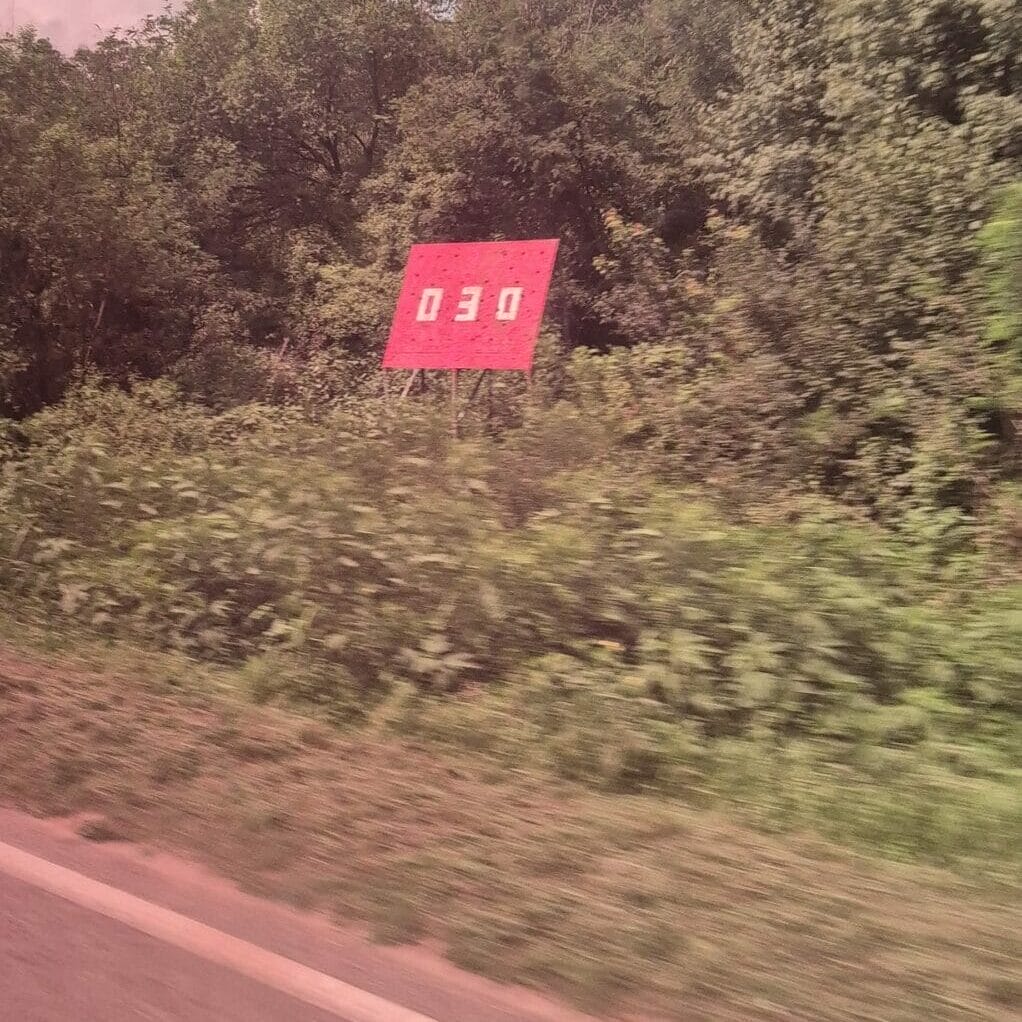

Every now and then, a diligent North Korean picks up a shovel and digs a tunnel under the DMZ. Since the DMZ is 4 km wide at its widest point, this means the tunnel must be at least about 2 km long. Four of these tunnels have already been discovered. The third tunnel, which is 1.6 km long and not yet completed, was discovered in South Korea during a detonation.
Located 44 km from Seoul, this tunnel was discovered in 1978. It could have transported approximately 30,000 soldiers per hour from North Korea to South Korea. Information boards tell me that the tunnel was possibly intended for a surprise attack on Seoul. Besides these four tunnels, there are likely 20 more that the South Korean military is constantly searching for.
No photos are allowed in the tunnel itself. I am only going a short way in, but I am already about 250 meters from the actual border with North Korea. An intense feeling.
Right next to the tunnel entrance is a beautiful park, with a fake border to North and South Korea. You can jump back and forth there for photos. A praying mantis is currently crawling on barbed wire and looks at me, surprised. They are so big that they can really look over at you. I try to get a bit of barbed wire for free, but they won't let me. Oh well.
Unification Village

Unification Village is one of two villages located within the DMZ. The second village is on the North Korean side and is referred to as a propaganda village. Unification Village is seen as a symbol of hope for peace and reunification.
It was built in 1973 to support people in the region who had to leave their homes due to the war. They are mostly farmers who live from rice cultivation. However, ginseng and cocoa are also grown here. I load up on cocoa-coated fava beans at a tourist shop in the middle of the area. They are really delicious! And supposedly healthy.
I am told that life here is relatively safe for the residents. The military is present around the clock, and the residents have a curfew overnight. Always! Ooh ooh ooh. One must want that.
In return, they pay hardly any taxes and are otherwise well-protected. They are considered the richest South Koreans. In exchange, they partially give up their freedom. Because while they are allowed to travel to South Korea, they must return by 6 p.m. every day, otherwise they can only re-enter the following morning. A headcount takes place every day to ensure that all residents are in the DMZ.
The village looks cute, actually quite normal. I see a few rice paddies and a few shops. After everyone in our group has stocked up on food from the DMZ, we leave it again.
The military is marching through our bus again, making sure we all leave the DMZ.
Dora Observation Deck

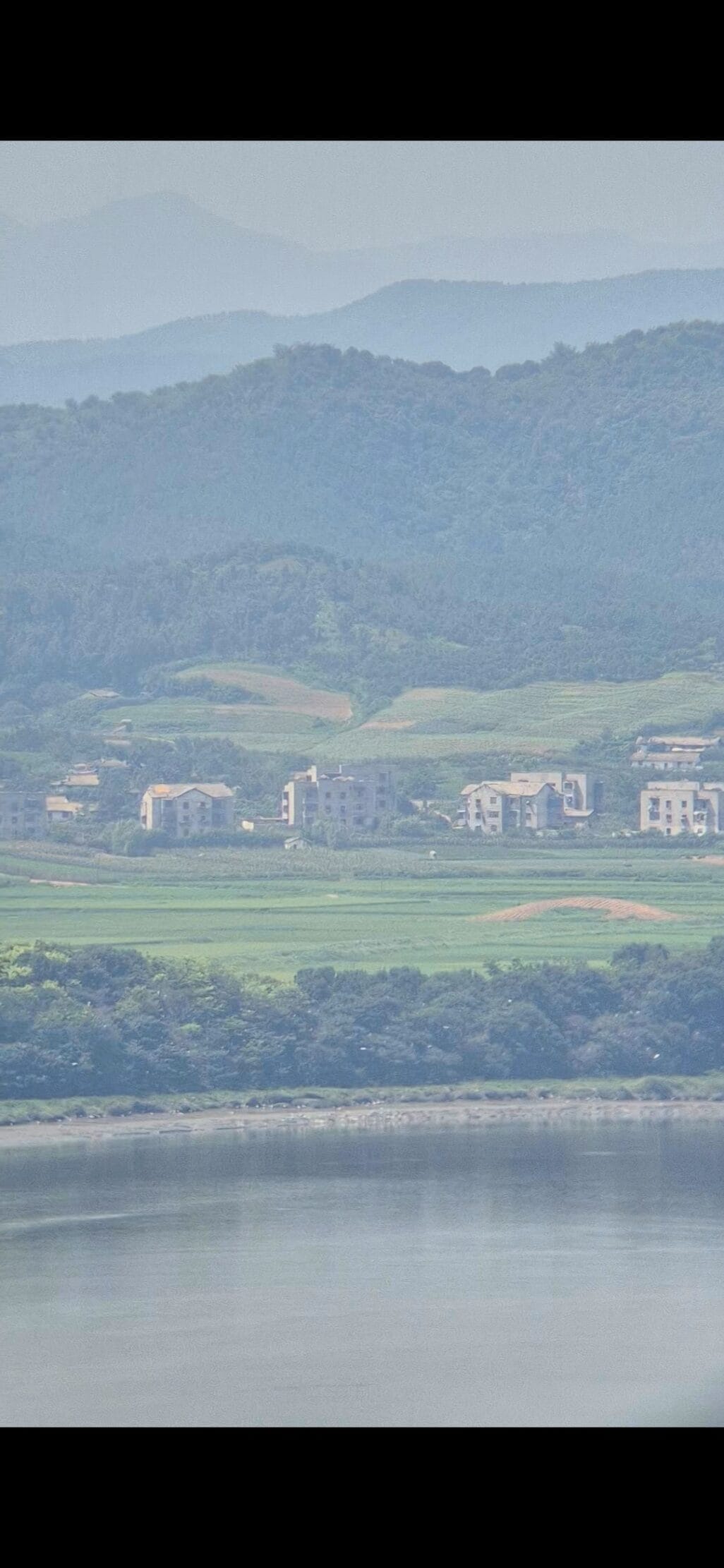
The last stop on my excursion is located outside the DMZ, but it is the narrowest point of the DMZ. Situated on a hill, Mount Dora, you have the opportunity here to look directly into North Korea across the DMZ. The observation deck has multiple levels. On level 2, there are binoculars that even allow you to take cellphone photos.
In the distance, I see a North Korean guard post, a Memorial Hall, and farmhouses with rice paddies. It's exciting to explore such a special country, or rather, to catch a glimpse of life there.
On the top floor, there's a cafe, and I'm treating myself to a delicious cafe latte there, with a view of North Korea, of course. That's really special.
Conclusion – Visit to the DMZ, South Korea
That was certainly a special day and a great experience for me. Pure thrill, although the tour is absolutely safe. But a small residual risk remains when you are in such a border area. Furthermore, the entire area is mined. Although there are mine warnings everywhere, I also learned that the rain and floods often wash mines away, and they then appear elsewhere and detonate. This is how some people in South Korea get injured every year.
Despite all the exciting stories and dramatic events from the past, I am still always cautious. It's just one side that I'm hearing here, after all. How much of it is really true, how much is embellished, and what is pure propaganda. In any case, this excursion has been mega interesting.
The feeling of standing in such a demilitarized zone is sensational, and as already mentioned, pictures can in no way describe or show that feeling. If you were to Seoul or the surrounding area, take a look at the DMZ Tours a.
Let me know in the comments if you've ever been to the DMZ and what amazed or fascinated you the most there.
Photo gallery Visit to the DMZ South Korea


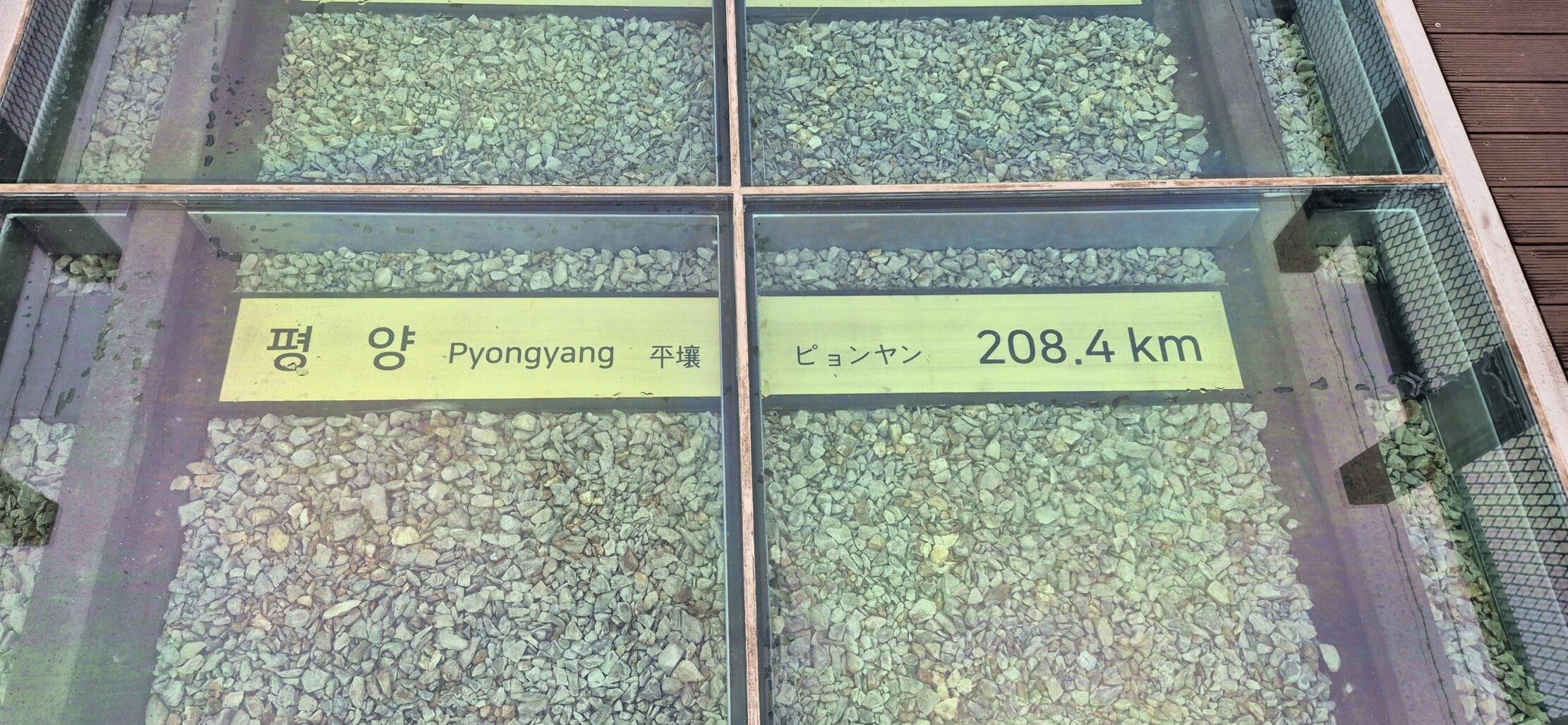




- About the Author
- Latest posts

On my travel blog Wandernotizen I'll take you along on our family trips around the globe. Between wanderlust and everyday chaos, you'll find honest travel reports, tips, and plenty of material to ignite your wanderlust. 🧭 ❤️ 🏝️
4 thoughts on “Nordkorea DMZ Südkorea 2024 – Ausflug zu einer der gefährlichsten Grenzen der Welt”